
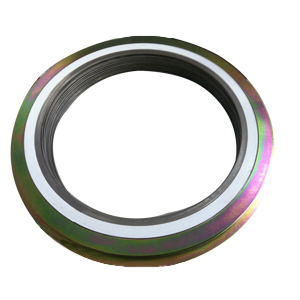
A pipe gasket is a type of mechanical seal that fills the space between two or more mating surfaces, such as pipe flanges, to prevent leaks. It is a deformable material that creates a tight seal when compressed. Gaskets are essential in piping systems to prevent the loss of fluids or gases and to maintain a secure connection. They come in various types and are made from different materials, including rubber, non-asbestos fibers, and metals, to suit different applications, pressures, and temperatures.
A graphite gasket is a type of mechanical seal made from flexible graphite, a form of carbon. They are particularly well-suited for high-temperature and high-pressure applications where other gasket materials would fail.
Key characteristics and uses:
- High Temperature Resistance: Graphite gaskets can withstand extreme temperatures, often up to 850°F (454°C) in an oxidizing atmosphere, and even higher in non-oxidizing environments.
- Chemical Resistance: They are highly resistant to a wide range of corrosive chemicals, including acids, alkalies, and organic compounds.
- Flexibility and Conformability: The layered structure of graphite allows it to be flexible and conform to surface imperfections on flanges, ensuring a tight and reliable seal even on uneven surfaces.
- Common Applications: Graphite gaskets are commonly used in industries such as petrochemical, oil and gas, chemical processing, and power generation. Specific uses include sealing exhaust pipes, heat exchangers, and valve bonnets.
For added strength and durability, graphite gaskets are often reinforced with a metal core, such as a stainless steel foil or tang insert. This improves their resistance to pressure and makes them easier to handle.




Products

Latest News
- Landee Pipe Fitting Welcomed Pakistan Client Jul 13, 2016
- Valued Clients from US Visited Landee in Sep 2015 Nov 21, 2016
Useful Links
Contact Us
Tel: 86-592-5204188
Fax: 86-592-5204189
E-mail: [email protected]
Landee Russian:
Трубы Стальные
All Right Reserved © Landee Pipe Fitting Manufacturing Co., Ltd. Privacy Policy | Terms of Service | sitemap
Links: China Pipe Fittings, Steel Pipe Factory, LDPE Pipe Manufacturer, China Gasket Manufacturer, Steel Pipe Manufacturer China.
Website Design & Support: jeawin.com